I heard last night a little child go singing
‘Neath Casa Guidi windows, by the church,
O bella liberta, O bella! Stringing
The same words still on notes he went in search
So high for, you concluded the upspringing
Of such a nimble bird to sky from perch
Must leave the whole bush in a tremble green,
And that the heart of Italy must beat,
While such a voice had leave to rise serene
‘Twixt church and palace of a Florence street!
A little child, too, who not long had been
By mother’s finger steadied on his feet,
And still
O bella liberta he sang.
 |
| Palazzo Guidi |
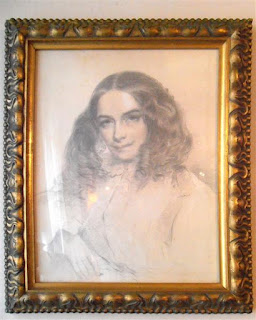
From the windows of her Casa Guidi apartment, Elizabeth Barrett Browning observed the Italian popular uprising taking place in 1848 - initially successful, but then ruthlessly crushed. Shortly afterwards Elizabeth saw the troops of the Austro Hungarian empire marching through the Pitti Palace square where she had watched and applauded the rebels. ‘We beheld the armament of Austria flow/into the drowning heart of Tuscany’, she wrote in her long, political poem ‘Casa Guidi Windows’. It’s not much read now, but there are some lovely sections. She was scathing about the Catholic Church:
‘Best unbar the doors,
Which Peter’s heirs keep locked so overclose
They only let the mice across the floors,
While every churchman dangles, as he goes,
The great key at his girdle.’
And there’s a warning. ‘Those whom she-wolves suckle/Will bite as wolves do’.
Casa Guidi stands in a tiny piazza ‘San Felice’ at the southern corner of the Pitti Palace. It’s a big palazzo created from two houses built in the 15th century and then owned by the ambitious Guidi family who worked for the Medici. Elizabeth and her husband Robert Browning rented an 8 room apartment on the first floor after their marriage and it was here that their son ‘Pen’ was born, and where Elizabeth wrote some of her most famous poetry, including her long, ardently feminist, verse novel ‘Aurora Leigh’. After the Brownings’ deaths it was used by their son Pen until his death in 1912.
 |
| Pen Browning |
It’s now a museum and has been re-furnished with as much of the original furniture and paintings as the trustees could find. It’s surprisingly homely, with beautifully proportioned rooms and polished floors. There’s a small entrance hall, with doors through to the kitchen, the maid’s room and Pen’s nursery. The dining room also opens off the hall and you can walk through to the drawing room and the Brownings’ bedroom.
On the other side of the dining room is a small dressing room used by Robert as a study until they acquired the large bedroom beyond it, which was converted into a study and library for him.
Elizabeth wrote in the drawing room on a reclining chair with the bustle of the house going on around her.
 |
| The chair is on the left, under the window |
I was struck by the fact that 19th century women writers so rarely had their own workspace - Emily Dickinson writing in her bedroom, EBB and Jane Austen scribbling in the drawing room, the Brontes in the dining room at Haworth, Mrs Gaskell writing on the corner of the kitchen table. How did they do it?
 |
Elizabeth's letter to Napoleon
|
It’s a lovely museum, where you can sit on the furniture, peer out of the windows and take the books down from the shelves and read. Casa Guidi is owned by
the Landmark Trust and you can also book to stay there - the thought of sleeping in EBB’s bed and having breakfast in her kitchen is very, very tempting. I might just try it next time I have to stay in Florence, but it’s difficult to find an excuse to do that when it’s only a short train ride away from where I live!